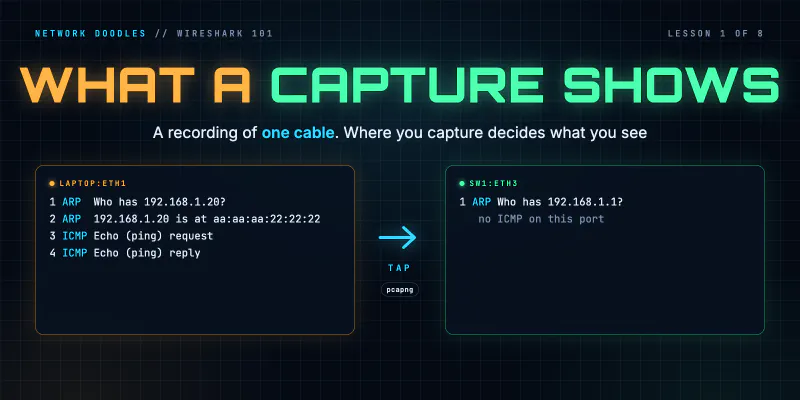
What a Packet Capture Shows You (Wireshark 101, Lesson 1)
A packet capture is a recording of the frames that crossed one point in the network. Wireshark's three panes, timestamps, pcap vs pcapng, and why …
8 entries
A packet capture is a recording of the frames that crossed one point in the network. Wireshark's three panes, timestamps, pcap vs pcapng, and why …
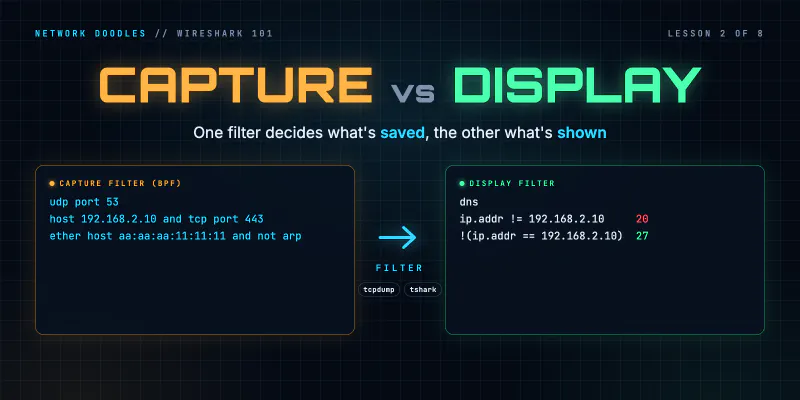
Capture filters decide what's saved and can't be undone. Display filters decide what you see. BPF vs Wireshark fields, contains and matches, and why …
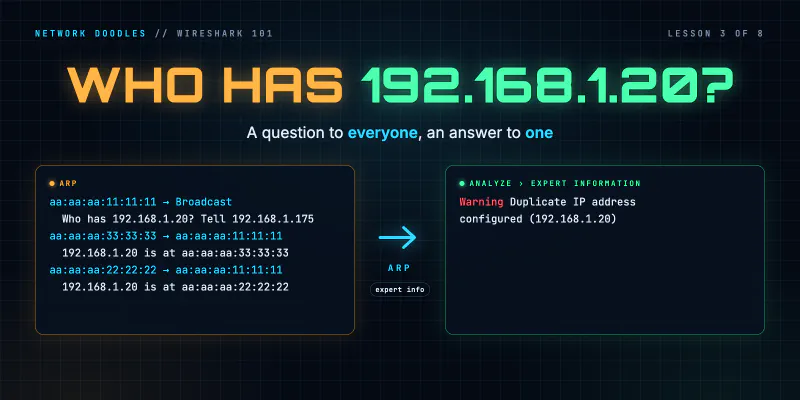
ARP turns an IP address into a MAC address with one broadcast question and one unicast answer. The fields, the neighbor cache, ARP for the gateway, …
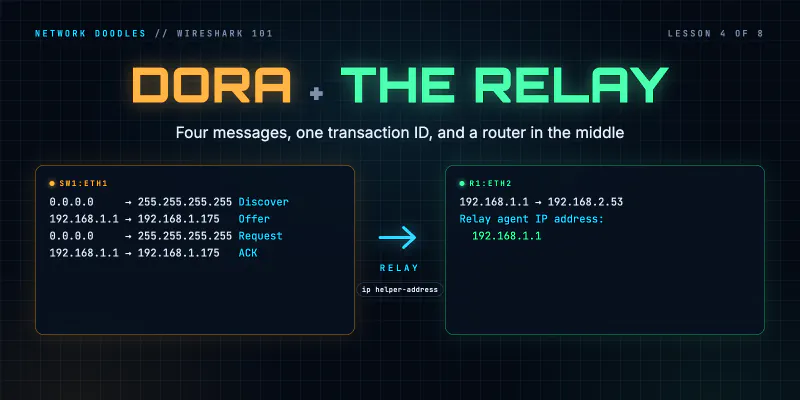
DHCP in packets: four messages sent before the host has an address, the options that matter, leases and renewal, and how a relay with ip …
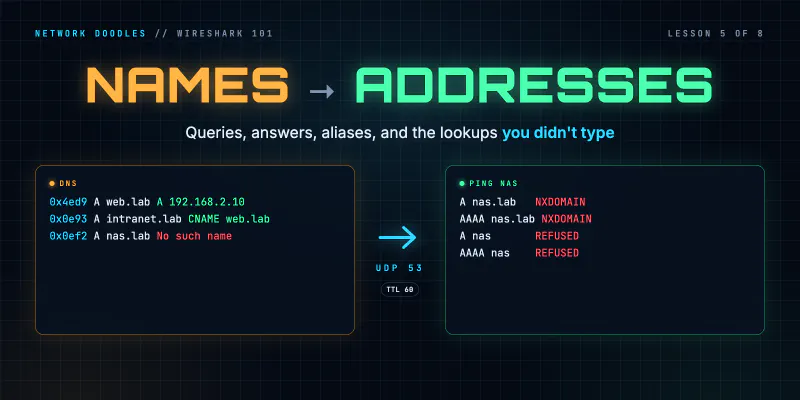
A DNS lookup is two UDP packets matched by a transaction ID. How to read the flags, the reply codes, A, AAAA and CNAME records and TTLs in Wireshark, …
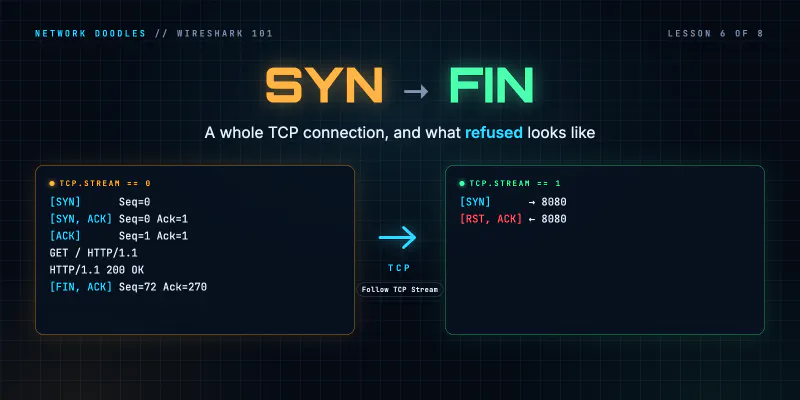
One web page is twelve TCP frames. How to read the handshake, sequence and acknowledgement numbers, the window and SYN options in Wireshark, how a …
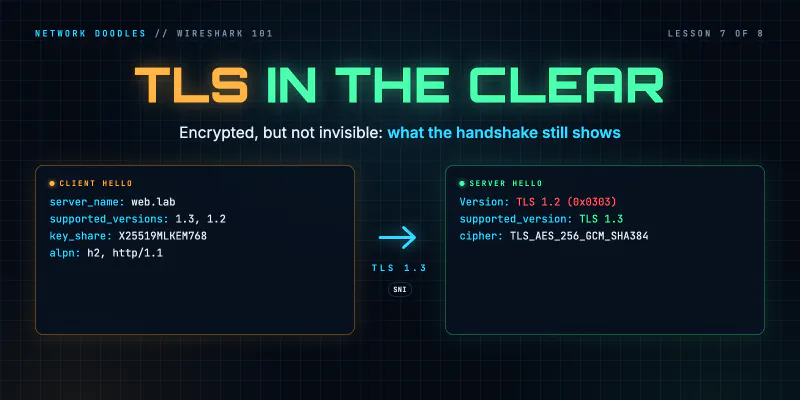
HTTPS hides the page, not the handshake. What Wireshark still reads in TLS 1.2 and 1.3: the server name, versions, ciphers, ALPN and certificate, why …
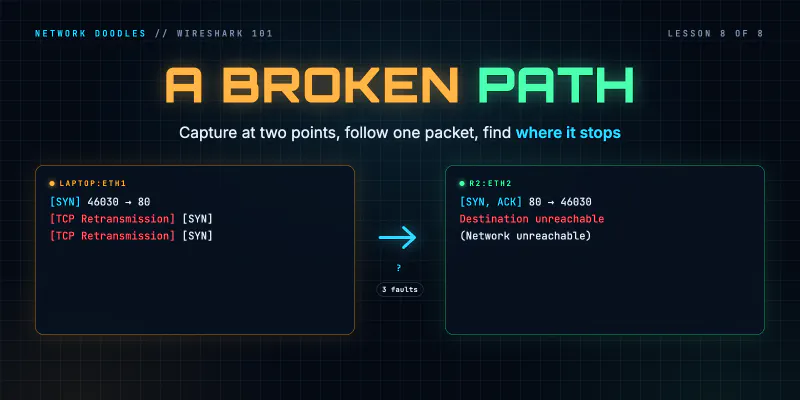
Capture at two points at once and follow one packet: the fault is between the last place you see it and the first you don't. How loss, a silent ACL …