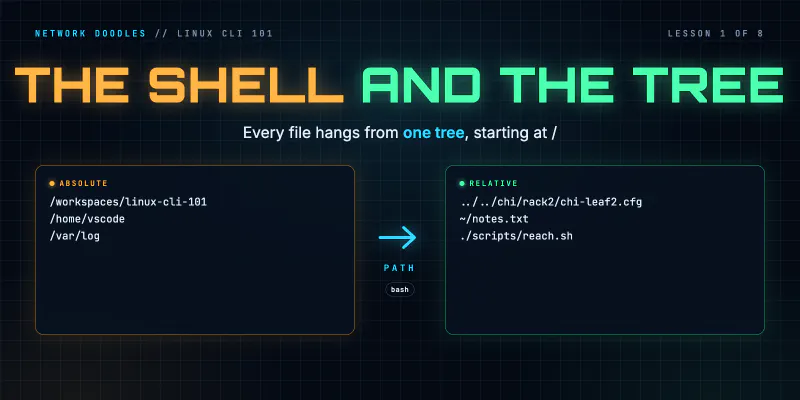
The Shell and the Filesystem: Reading Any Path (Linux CLI 101, Lesson 1)
A shell reads the commands you type and runs them. Linux keeps every file in one tree that starts at /. The prompt, commands and their options, …
8 entries
A shell reads the commands you type and runs them. Linux keeps every file in one tree that starts at /. The prompt, commands and their options, …
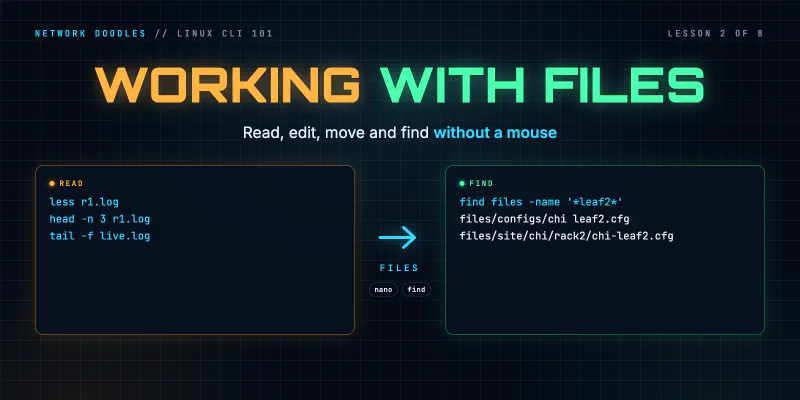
Most of what you do on Linux is reading and changing text files: logs, configs, inventories. How to read them with cat, less, head and tail -f, edit …
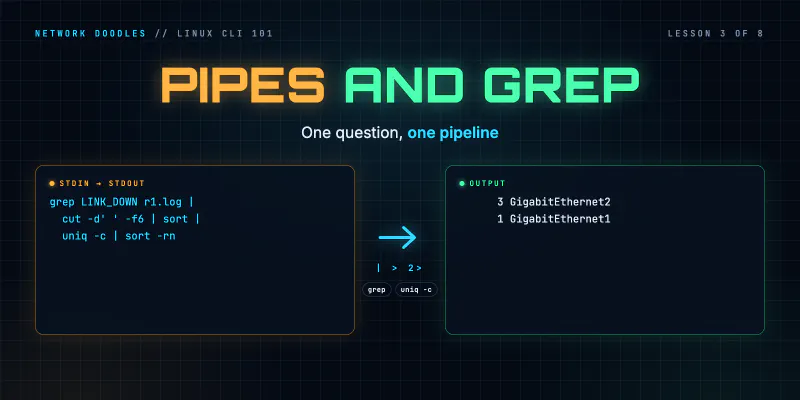
Every Linux command reads from stdin and writes to stdout and stderr. Redirect those streams to files, pipe one command into the next, and grep, sort …
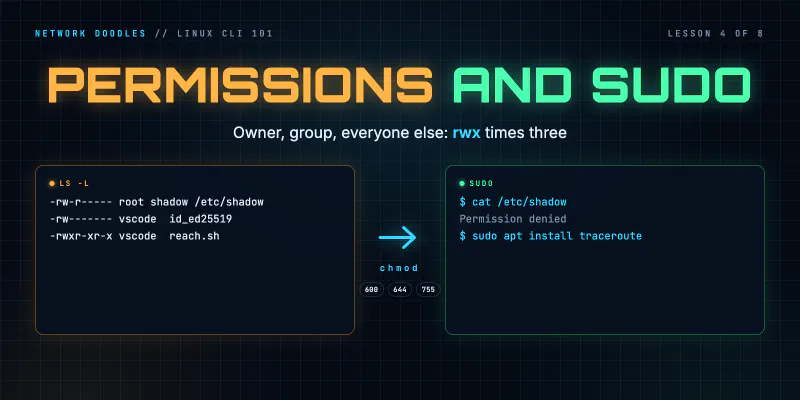
Every Linux file has an owner, a group and nine permission bits. Read them in ls -l, set them with chmod as 644, 755 or 600, see why SSH ignores a key …
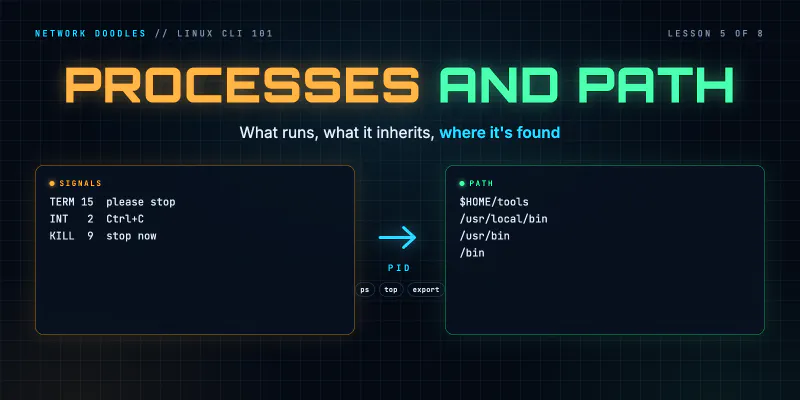
Every running program is a process with a number. How to run jobs in the background, find a process that's eating a CPU and stop it, what TERM and …
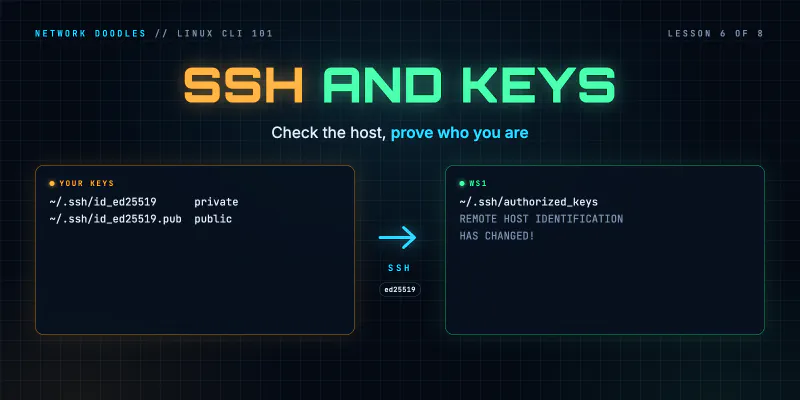
SSH gives you a shell on another machine over an encrypted connection. Host keys, known_hosts, what 'host key changed' means, key pairs and …
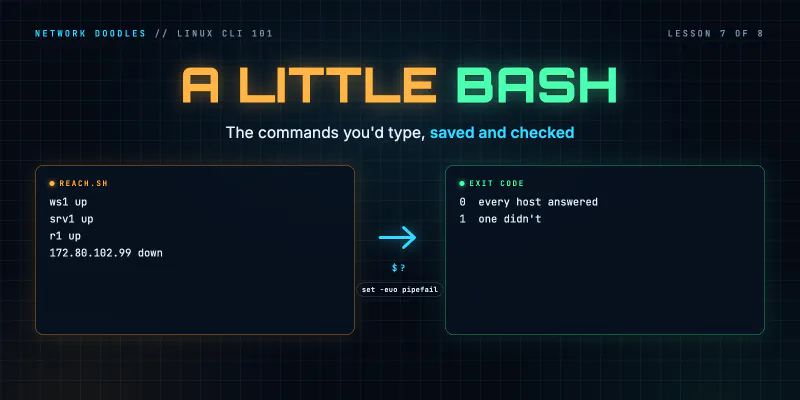
A Bash script is the commands you'd type, saved in a file. The shebang, quoting, arguments, looping over a file of hosts, exit codes, if, && and ||, …
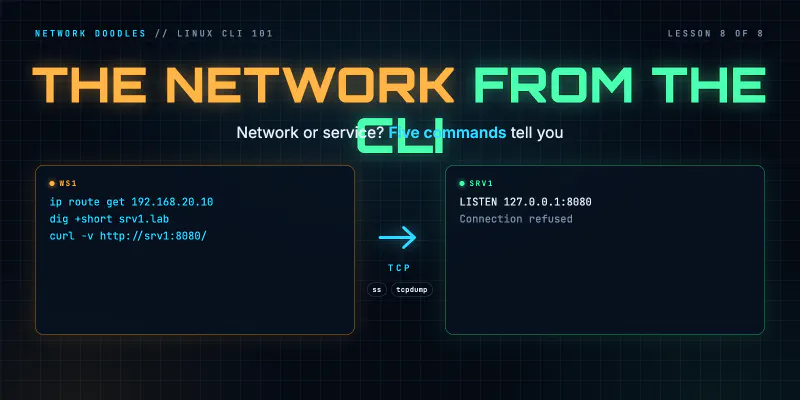
When a service answers on the server but not from anywhere else, five commands find out why: which way the packet goes, what's listening on which …